
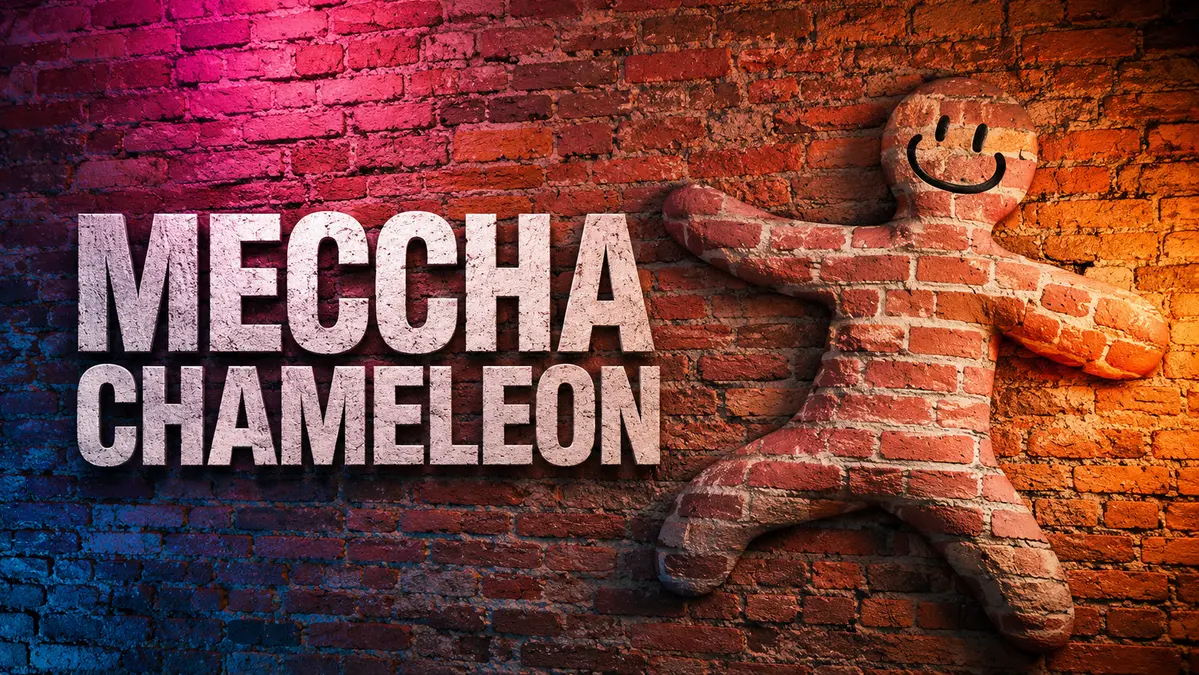
Meccha Chameleon is no longer just the weird indie game people were sharing in clips. It has become one of the biggest Steam stories of 2026.
Developed by Japanese solo creator lemorion_1224 with artwork by Haganeiro, the game launched on Steam with a simple idea, a tiny team and no traditional blockbuster campaign behind it. A few days later, it had already turned into a full-scale multiplayer phenomenon.
The latest milestone pushes the story even further: Meccha Chameleon has now passed 7 million copies sold, according to the game’s own Steam news feed. That is a massive jump from the 5 million figure that was already making headlines earlier in the week.
Its player numbers are just as impressive. SteamDB now lists an all-time peak of 340,534 concurrent players, reached on June 21, 2026. For a game built around a goofy camouflage mechanic and released by a tiny team, that number puts Meccha Chameleon in territory usually reserved for major multiplayer releases, established franchises or heavily marketed live-service games.
What Meccha Chameleon actually is
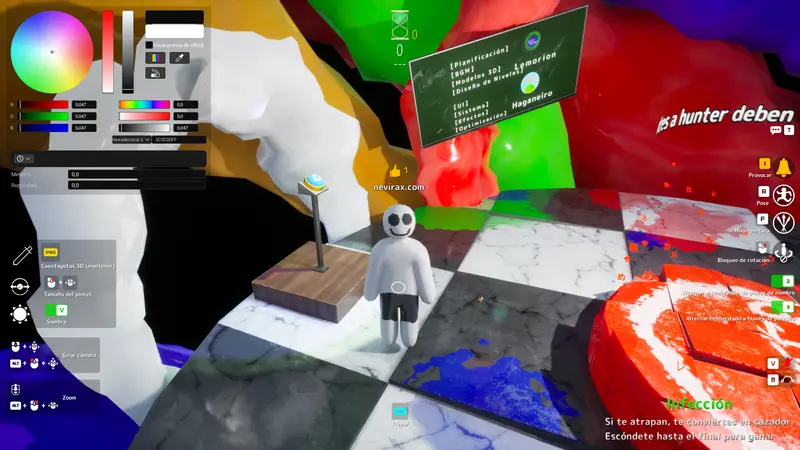
Meccha Chameleon is a multiplayer hide-and-seek game, but its twist is what makes it instantly understandable.
Instead of turning into a chair, a barrel or a random object like in Prop Hunt-style modes, players hide by painting themselves. Each player starts as a white, soft-looking humanoid blob. Before the hunting phase begins, hiders choose a spot on the map and use an in-game painting tool to cover their character with the colors and patterns around them.
The tool feels deliberately simple. There is a brush, a color wheel, an eyedropper and enough freedom to copy a wall, a floor, a sign, a shadow or any strange background detail that might fool the seeker.
The result is a game where the hiding spot is only part of the strategy. Your pose matters. Your paint job matters. Your confidence matters even more.
You can blend into a brick wall, pretend to be part of a floor pattern, lie down like a random object or stand in plain sight and hope the seeker dismisses you as part of the scenery. That combination makes every round easy to understand and hard to predict.
Why it blew up with players and streamers
Meccha Chameleon works because it creates funny moments without needing much setup.
A player paints themselves into a wall. A seeker walks right past them. Everyone in voice chat loses it. That is the whole pitch, and it works immediately.
This is exactly the kind of game that spreads well on Twitch, YouTube Shorts and TikTok. Viewers do not need to understand a complex build, a meta strategy or a competitive ranking system. The joke is visual. Someone is hiding in front of everyone, and nobody sees them.
That makes the game perfect for clips. It also makes it perfect for friend groups. One player sees a funny moment, buys the game, sends it to a Discord chat, and suddenly the whole group wants to try it.
That social loop is similar to what helped games like Among Us, Lethal Company and Content Warning explode. These are not games that rely only on mechanical depth. They rely on people creating chaos together.
Meccha Chameleon fits directly into that modern party-game lane: cheap, chaotic, easy to explain and built around moments that are funnier when shared.
The $3.99 price matters
One of the biggest reasons the game spread so fast is the price.
On Steam Argentina, Meccha Chameleon is currently shown at $3.99. Pricing can vary by region because Steam uses regional pricing and discounts, but the larger point is the same: this is a very low-cost multiplayer game at a time when many major releases are becoming more expensive.
That matters because multiplayer games need groups. A funny idea is not enough if the price blocks people from convincing friends to join. Meccha Chameleon avoids that problem. It is cheap enough to become an impulse buy and simple enough to sell itself through a single clip.
That low barrier turns every player into potential marketing. If one person buys it and laughs with friends, more copies can follow almost immediately.
The new peak: 340,534 concurrent players
The jump to 340,534 concurrent players is one of the clearest signs that Meccha Chameleon is not only selling because of hype. People are actually playing it at scale.
That matters for a multiplayer game. A viral launch can produce huge sales, but if players leave quickly, matchmaking dies and the conversation fades. Meccha Chameleon, at least for now, is doing the opposite. It is growing, staying visible and keeping enough players online to make the whole thing feel alive.
SteamDB also lists the game among the top sellers and tracks hundreds of thousands of active players around its peak window, showing how quickly it moved from novelty to one of the platform’s most active games.
For a project this small, that kind of momentum is rare.
Fast updates and a Japan-themed map
The 7 million sales announcement also came with important news for players: a new official Japan-themed map was scheduled to arrive immediately or shortly after the announcement.
That is more important than it sounds. Viral multiplayer games often face the same problem after launch: everyone talks about them at once, but the content can run out quickly. Once players have seen the best jokes, learned the maps and repeated the same tricks, attention can move elsewhere.
Meccha Chameleon now has to prove it can keep adding reasons to return.
The game has already received update 1.6.0, which added an option to change the size of hiders and introduced countermeasures for cloud save errors. Those are not massive headline features, but they show that the developer is reacting quickly while the player base is still growing.
For a game that exploded this fast, that early support matters.
Why the success feels different
Meccha Chameleon is not just another indie game with a lucky launch. Its success says something about where multiplayer discovery is right now.
Players are not only looking for polished trailers or huge production values. They are looking for games that instantly create stories. A good clip can now do what a traditional marketing campaign used to do: explain the game, sell the joke and convince people to buy it.
Meccha Chameleon is built for that environment. The idea is clear in seconds. The visuals are silly without being confusing. The failures are funny. The wins are even funnier when they feel undeserved.
That is why the game feels so natural on streaming platforms. It gives creators material without forcing them to manufacture drama. The match itself creates the punchline.
The pressure starts now
The hard part begins after the viral explosion.
Meccha Chameleon already has the sales, the player peak and the social media attention. What it needs now is staying power. More maps, more modes, better stability and new tools will decide whether it becomes a long-term party-game staple or another Steam phenomenon that burns bright for a few weeks and disappears.
For now, the game remains exclusive to PC. There are no confirmed PlayStation, Xbox or Nintendo Switch versions. If the audience stays this large, console demand will almost certainly grow, especially because the concept is simple enough to work outside the PC crowd.
The challenge is scale. A tiny team can create a viral hit, but supporting millions of players is a different job entirely.
Still, Meccha Chameleon has already achieved something most indie games never get close to. A strange hide-and-seek game about painting yourself into walls has become one of Steam’s biggest multiplayer breakouts of 2026 — and it did it with a price low enough, and a hook clear enough, to spread almost entirely through players.




Comments
💬 Log in to comment💬 Join the conversation and log in to comment.