
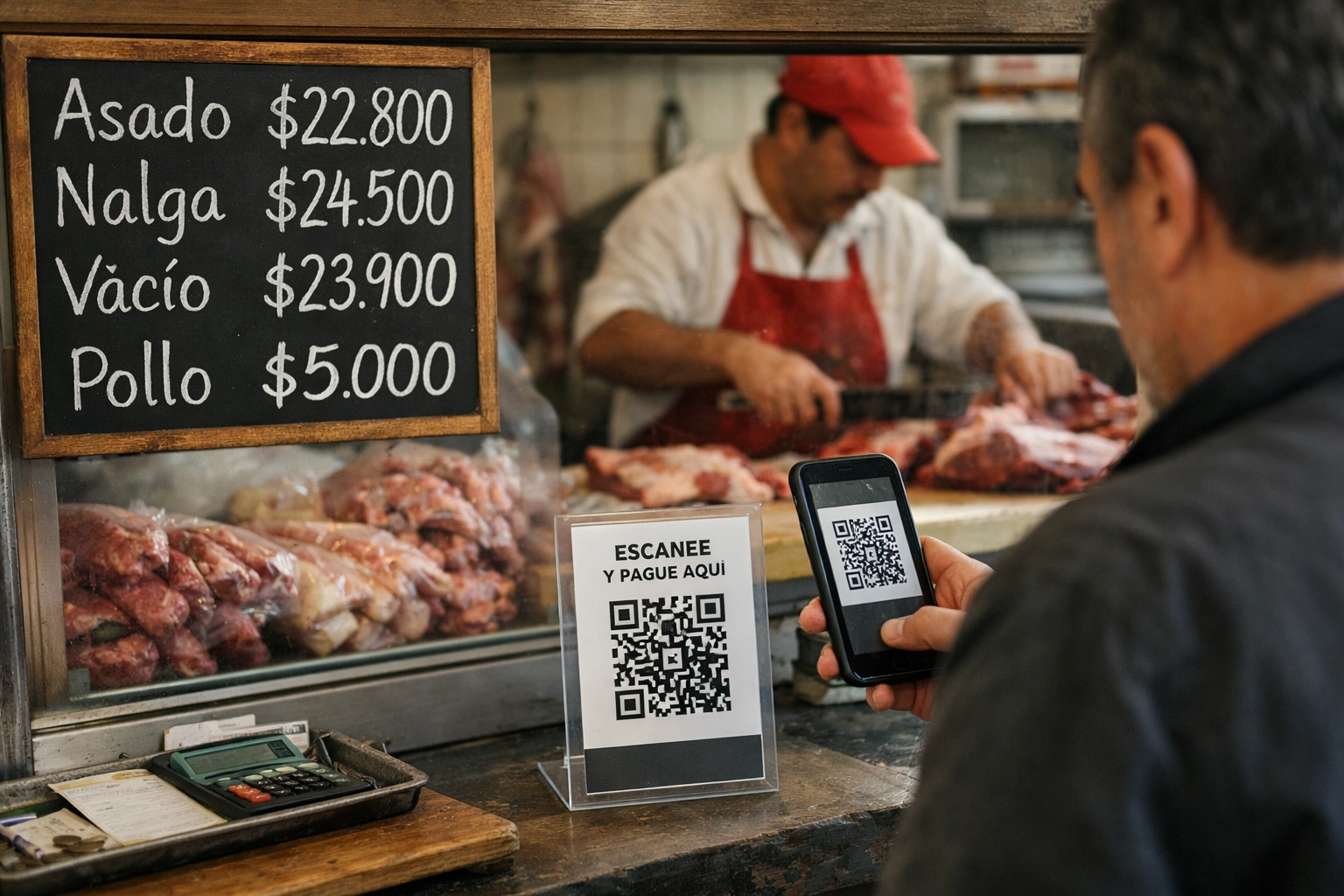
Argentina’s economic landscape continues to evolve as price adjustments and digital payment methods redefine daily transactions. Across urban centers and suburban neighborhoods, store owners are updating price boards frequently while QR codes become a standard feature at checkout counters.
The combination of persistent inflationary pressure and digital financial tools has created a commercial environment that is more dynamic than ever. Businesses must respond quickly to supplier changes, while consumers adjust spending habits in real time.
Constant Price Adjustments
According to recent official data released by national statistics authorities, inflation remains a central factor influencing pricing strategies. Although monthly figures fluctuate, the broader trend reflects ongoing cost pressures affecting food, transportation and retail goods.
In local butcher shops and grocery stores, staple items such as beef cuts and whole chicken have seen repeated price revisions. Merchants explain that wholesale lists often arrive updated, forcing them to modify retail prices to maintain sustainable margins.
As a result, customers frequently ask about price changes before making purchasing decisions. Weekly shopping routines now require closer budgeting and more selective buying.
The Expansion of QR Payments
At the same time, QR-based payments and instant bank transfers have become deeply embedded in Argentina’s retail ecosystem. In many small businesses, the majority of daily transactions are completed digitally rather than in cash.
Digital payments provide convenience, speed and automatic record-keeping. For merchants, they reduce the risks associated with handling cash and simplify accounting processes. For consumers, they offer ease of use and access to promotional discounts.

What began as an alternative method has now become standard practice. Customers often expect QR availability, and businesses that fail to offer it risk losing sales.
Greater Transparency and Fiscal Oversight
The widespread adoption of digital payments also increases transaction traceability. Each transfer leaves a financial footprint, strengthening oversight mechanisms within the tax system.
Economic analysts suggest that this shift contributes to gradual formalization in the retail sector. While greater transparency can enhance financial stability, it also requires merchants to manage tax compliance more carefully.
Self-employed workers and small business owners must monitor invoicing and declared income closely, as automated data cross-checking becomes more sophisticated.
Changing Consumer Behavior
Argentine consumers are increasingly price-sensitive and tech-oriented. Many compare costs online, check digital promotions and select stores based on available payment options.
Cashback programs, installment plans and app-based discounts strongly influence purchasing choices. This competitive environment pushes businesses to innovate and differentiate themselves beyond traditional pricing strategies.
At the same time, households prioritize essential spending and carefully plan weekly purchases. Budget awareness has become a defining feature of everyday consumption.
A Transforming Commercial Landscape
The coexistence of handwritten price boards and printed QR codes symbolizes Argentina’s current economic stage. Traditional retail practices now blend with digital financial infrastructure.
This evolving environment is unlikely to reverse. As inflation dynamics and digital adoption continue shaping the market, local commerce will remain at the center of Argentina’s economic transformation.
Ultimately, the intersection of rising prices and expanding digital payments defines a new chapter for Argentine businesses and consumers alike.





Comments
💬 Log in to comment💬 Join the conversation and log in to comment.