
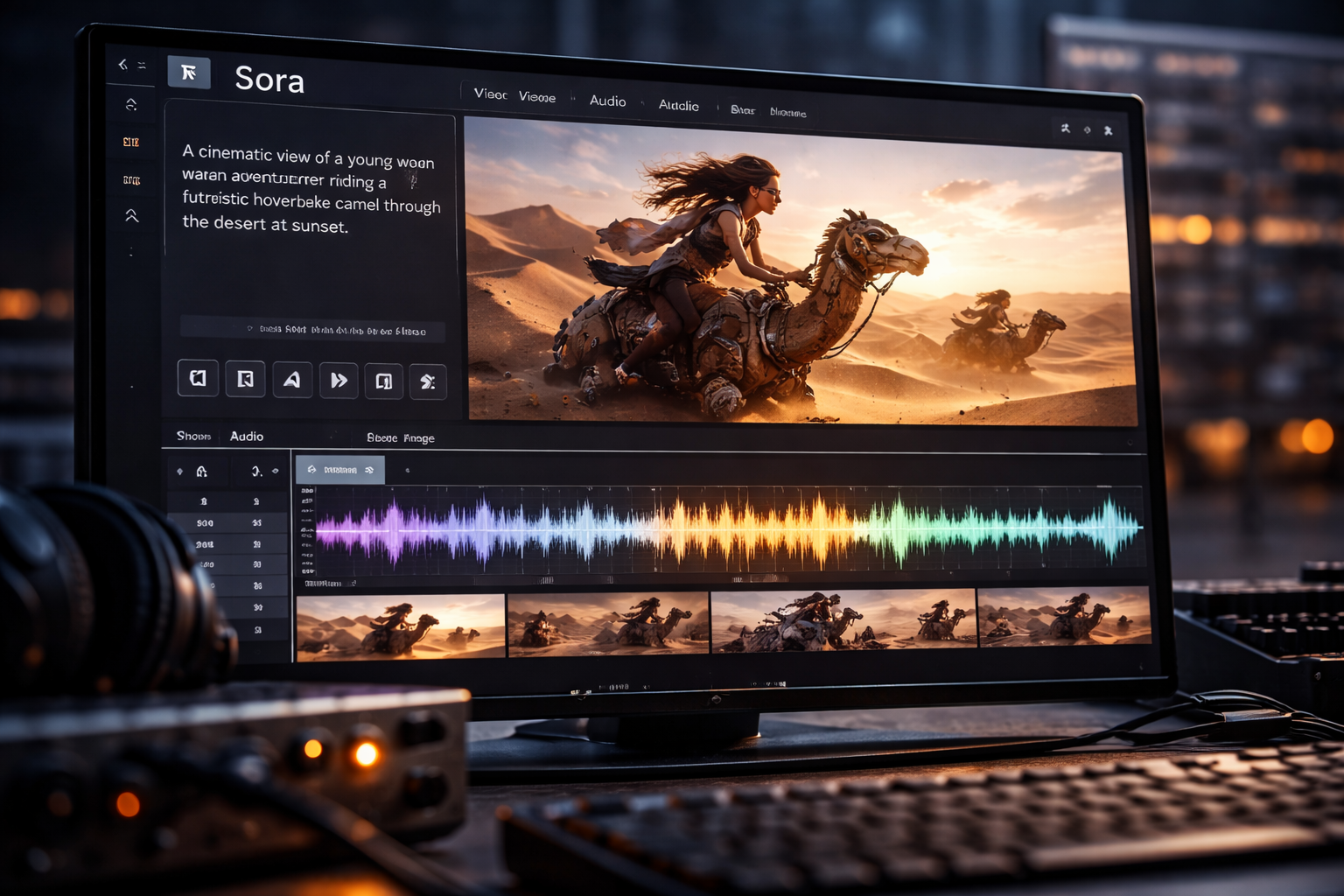
OpenAI made a major leap in AI video generation: Sora 2 arrived with a clear promise. It is no longer just about creating “nice-looking clips”, but about producing scenes with stronger narrative coherence, better creative control, and fully integrated synchronized audio.
This new version directly addresses one of the biggest challenges in AI video: delivering results that feel truly planned, directed, and ready to publish.
What’s new in Sora 2
Until now, the typical problems of video models were always the same:
- characters changing appearance,
- objects “mutating” randomly,
- unnatural movement,
- unrealistic physics,
- broken continuity between scenes.
With Sora 2, OpenAI aims to fix these issues at the core. The model was trained to maintain visual consistency, respect details, and sustain a more stable narrative logic.
It also introduces tools that allow creators to guide the output by adjusting tone, pacing, style, and composition, instead of relying purely on chance.
The goal is clear: move from “prompt testing” to directing digital scenes.
Audio: the upgrade that makes it real content
The addition of integrated audio marks a major turning point in practical use.
Users can now generate:
- ambient sound effects,
- footsteps and movement sounds,
- background music,
- voices or dialogue,
- tighter synchronization with visuals.
This makes it possible to produce content that is much closer to a finished product, without relying on external editors or extra workflows.
The bigger picture
Sora 2 is not just “a new model”. It is a signal that AI-generated video is entering a mature phase, with improvements designed for creators, brands, media outlets, and digital platforms.


Comments
💬 Log in to comment💬 Join the conversation and log in to comment.