
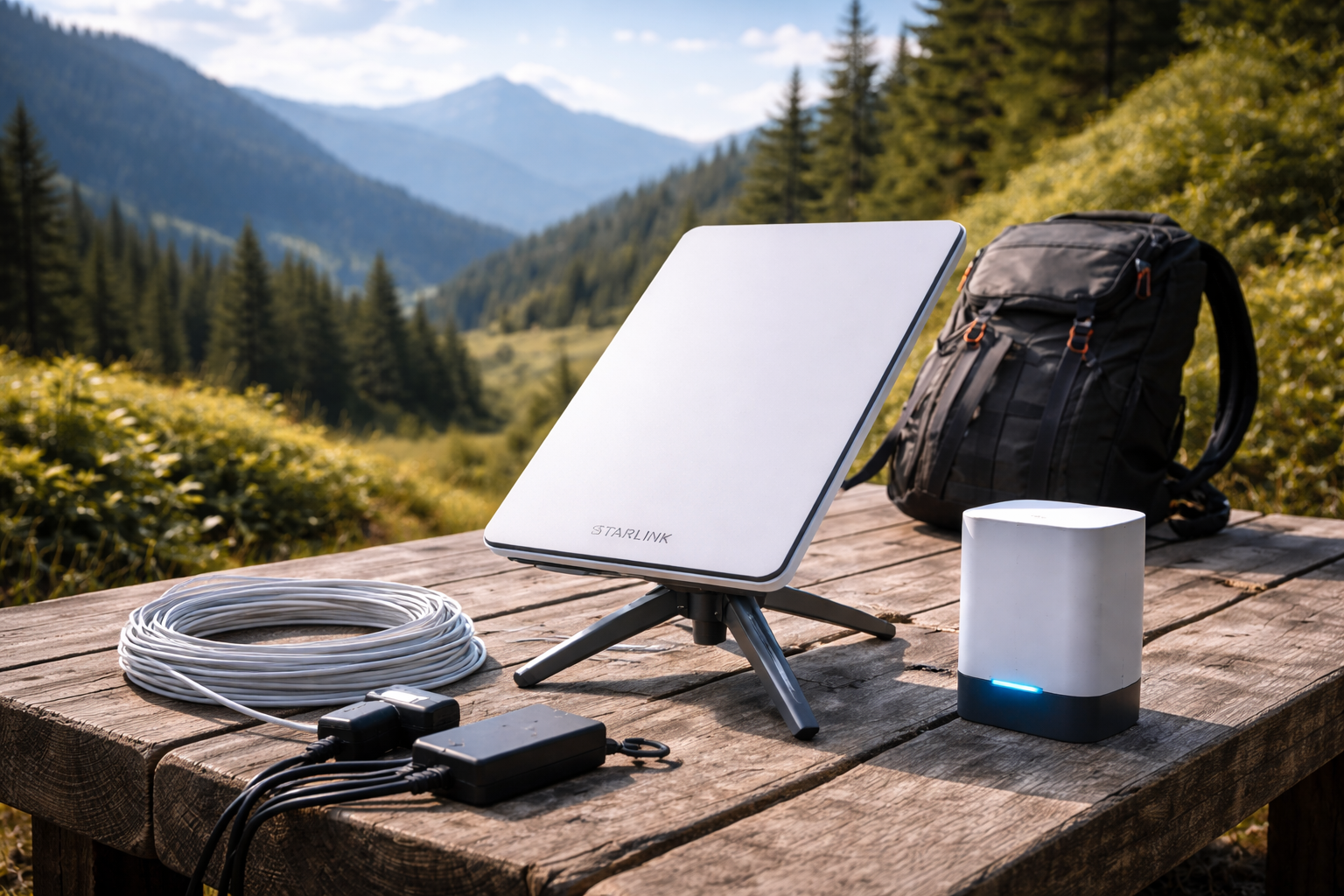
Starlink has taken an important step in the Argentine market by significantly lowering the prices of its equipment and services. This adjustment positions satellite internet as a real alternative to traditional connections, especially in regions where terrestrial infrastructure remains limited.
For years, the main barrier was the high upfront and monthly cost. Today, that barrier is beginning to fade, expanding the potential user base and redefining the role of satellite connectivity in the country.
What changed with pricing
The update has a direct impact on access:
- the Starlink Mini Kit now costs around ARS 142,500, down from over ARS 180,000,
- the Standard Kit is priced near ARS 374,999, compared to previous levels close to ARS 500,000,
- the residential monthly plan starts at around ARS 38,000, depending on area and availability,
- some special plans also show adjustments for mobility and data.
These prices make the service less exclusive and more accessible.
For many households and small businesses, entering the Starlink ecosystem is now financially feasible.
Connectivity where it didn’t exist before
Across large parts of the country, fiber optic networks are still unavailable or unstable. In rural areas, highways, farms, and remote towns, options are often slow or unreliable.
Starlink targets this gap by offering:
- stable speeds,
- lower latency compared to traditional satellites,
- wide coverage,
- relatively simple installation.
This enables connectivity for homes, schools, rural businesses, and essential services that previously had very limited access.
Impact on users and businesses
Lower prices also affect multiple sectors:
- agricultural producers with real-time monitoring,
- small businesses in remote areas,
- rural tourism,
- remote workers,
- distance education.
For many, this is not just “better internet”, but access to new economic and professional opportunities.
A structural shift
The price reduction does not appear to be a temporary promotion. It signals a phase where satellite internet stops being an emergency solution and starts competing directly with traditional providers.
This puts pressure on local markets to:
- improve service quality,
- invest in infrastructure,
- review pricing,
- accelerate deployments.
Competition is intensifying.
The bigger picture
Beyond cost, this move shows where connectivity is heading: more distributed access, less dependence on ground cables, and greater resilience to local failures.
The satellite model is becoming a central part of the digital ecosystem.
In a vast country like Argentina, this could make a profound difference in technological inclusion and regional development.






Comments
💬 Log in to comment💬 Join the conversation and log in to comment.