
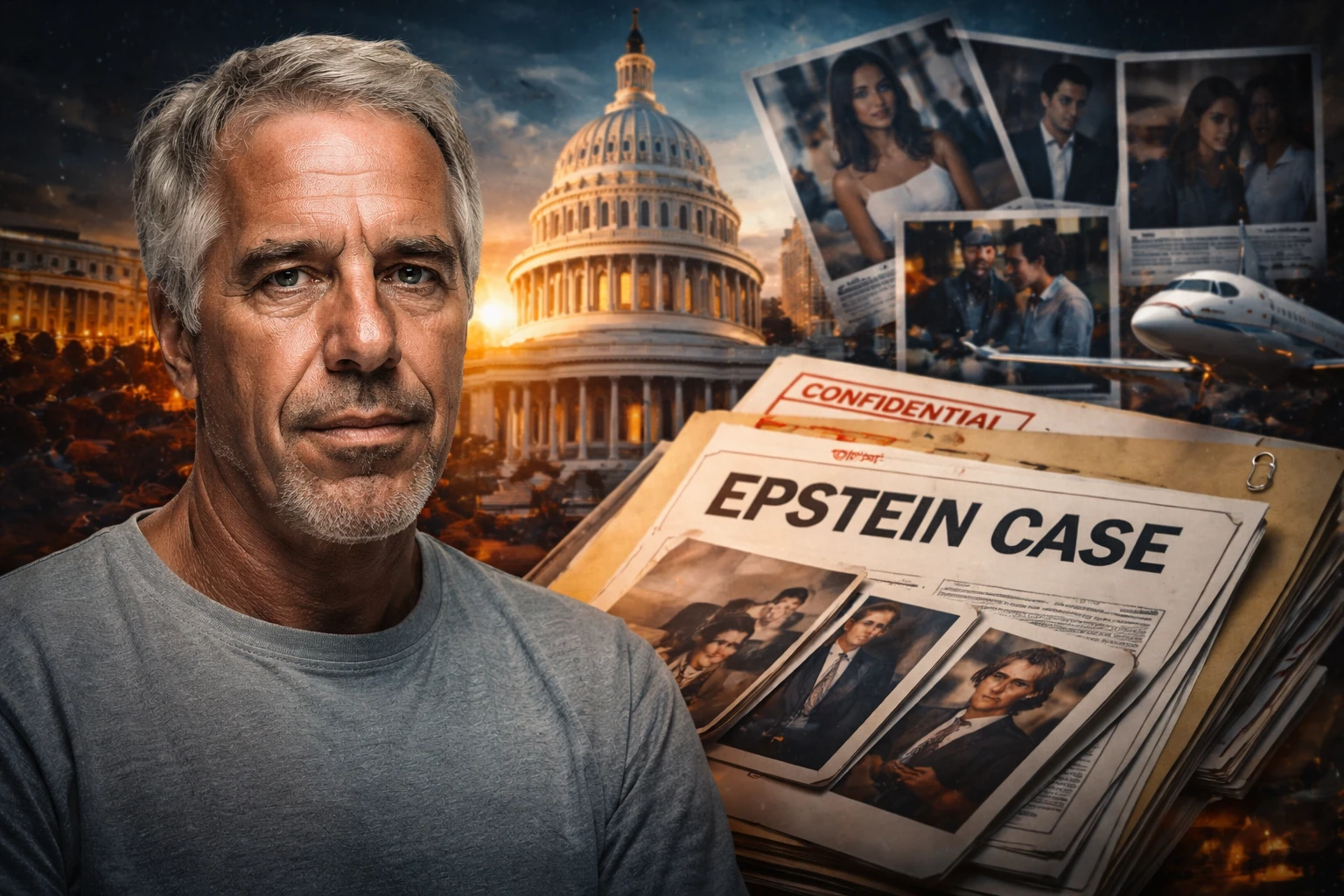
The name Jeffrey Epstein has once again dominated headlines worldwide following the release of new legal documents and renewed calls for accountability. Despite his death in 2019, the network he built and the crimes he was accused of remain deeply controversial.
Considered one of the most disturbing scandals in modern American history, the Epstein case continues to expose weaknesses in justice systems and the influence of powerful elites.
From financier to untouchable figure
Epstein presented himself as a successful financial advisor with connections to universities, governments and wealthy investors. Over time, he gained access to the highest levels of society.
His luxury properties in New York, Florida and the Caribbean became meeting points for politicians, businessmen and celebrities.

Behind that façade, however, investigators later uncovered a systematic operation focused on exploiting underage girls.
Early accusations and legal protection
The first major complaints appeared in the early 2000s, when several victims reported being recruited for inappropriate “massages” that led to sexual abuse.
Many of them were minors from disadvantaged backgrounds.
In 2008, Epstein avoided federal prosecution through a controversial plea deal that resulted in a light sentence. Critics argued that political influence played a key role in shielding him.
Arrest in 2019 and sudden death
In July 2019, federal authorities arrested Epstein again on sex trafficking charges. This time, prosecutors promised a full investigation.
Weeks later, he was found dead in his jail cell. Authorities ruled it a suicide, but malfunctioning cameras and security failures raised immediate suspicion.
Public confidence in the official explanation remains low.
Recently released documents
In recent months, courts have unsealed records from civil lawsuits involving Epstein’s associates. These files include:
- Flight logs
- Internal emails
- Witness testimonies
- Financial records
Several prominent individuals appear in these documents, although many have denied wrongdoing.
The disclosures reignited debates over accountability and transparency.
Political reactions and renewed demands
Lawmakers and advocacy groups have called for deeper investigations into possible institutional failures.
Some argue that Epstein’s death prevented authorities from exposing a wider international network.
Victims’ families continue to demand access to classified material and full disclosure of evidence.
Ghislaine Maxwell and confirmed operations
Epstein’s longtime associate, Ghislaine Maxwell, was convicted in 2022 for her role in recruiting and trafficking minors.
Her trial confirmed that the operation was highly organized and lasted for years.
However, she never publicly revealed the full list of collaborators.
Media influence and public perception
The Epstein case has reshaped discussions around:
- Abuse of power
- Elite privilege
- Judicial transparency
- Victim protection
Numerous documentaries and investigative reports have kept the story alive, reinforcing public pressure.
The unanswered questions
Many observers believe crucial information remains hidden. The lack of a complete trial left major gaps in the official narrative.
Key unresolved issues include:
- International connections
- Financial backing
- Political influence
- Possible cover-ups
So far, no investigation has fully addressed these points.
A case that still defines an era
More than six years after Epstein’s death, the scandal remains a symbol of institutional failure and unchecked influence.
New revelations suggest the story is far from over.
For many, true justice will only arrive when every responsible party is identified and held accountable.





Comments
💬 Log in to comment💬 Join the conversation and log in to comment.