
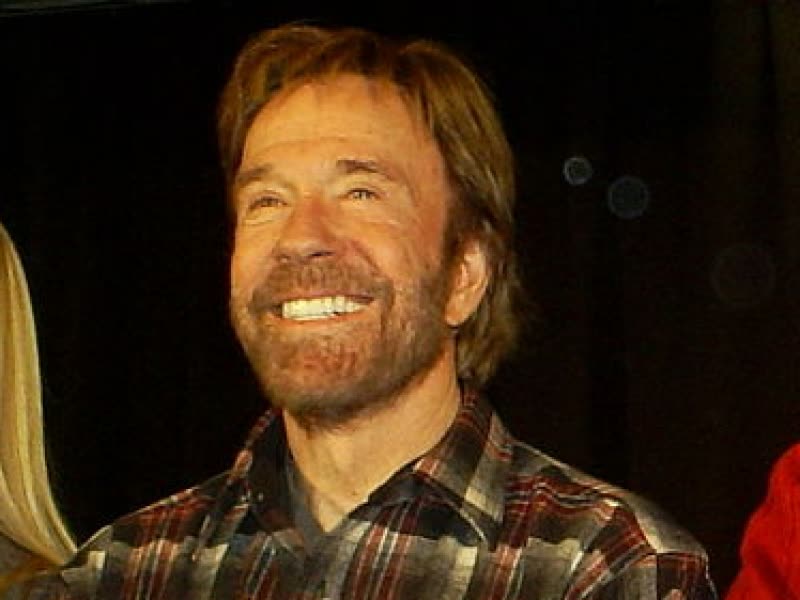
On Thursday March 19, 2026, Carlos Ray Norris — known the world over as Chuck Norris — died on the island of Kauai, Hawaii. He was 86. His family confirmed the news Friday morning through a statement posted to his official Instagram account: "With deep sadness, our family shares the sudden passing of our beloved Chuck Norris yesterday morning. While we wish to keep the circumstances private, please know that he was surrounded by his family and passed peacefully."
The words that followed captured what millions felt reading them: "To the world, he was a martial artist, actor and symbol of strength. To us, he was a devoted husband, a loving father and grandfather, an incredible brother and the heart of our family. He lived his life with faith, purpose and an unwavering commitment to the people he loved."
What makes the news especially striking is what happened just ten days before. On March 10, Chuck Norris turned 86 and celebrated the way he always did — training. He posted a video on Instagram showing him working through combat movements with a trainer outdoors in the Hawaiian sun. "I don't age," he wrote. "I level up." Nobody knew it would be one of his last posts.
From Oklahoma to South Korea: the years that shaped him
Chuck Norris was born on March 10, 1940, in Ryan, Oklahoma, into a family that struggled financially. He grew up between Kansas and California, and at 18 joined the United States Air Force. He was stationed at Osan Air Base in South Korea — and that's where everything began.
It was at that military base that the young soldier Carlos Ray Norris discovered martial arts. He started with Taekwondo and Tang Soo Do, and something in those disciplines changed him. Not just physically: the martial arts gave him structure, purpose and an identity he would carry for the rest of his life. Before turning 23 he had already earned his first dan in Tang Soo Do.
Back in the United States, he didn't slow down. He intensified. He competed in karate tournaments for years, building a record of close to 65 wins and just five losses, and claiming six world karate championships. It was on that circuit that he met Steve McQueen, who was taking private lessons from him. McQueen noticed something in Norris that Norris hadn't yet seen in himself — a natural charisma in front of the camera — and encouraged him to try Hollywood.
From Bruce Lee's rival to solo star
His big-screen debut came in 1972 in The Way of the Dragon, directed by and starring Bruce Lee. The fight sequence between the two men inside the Roman Colosseum became one of the most referenced action scenes in cinema history. Norris played the antagonist. Nobody forgot him.
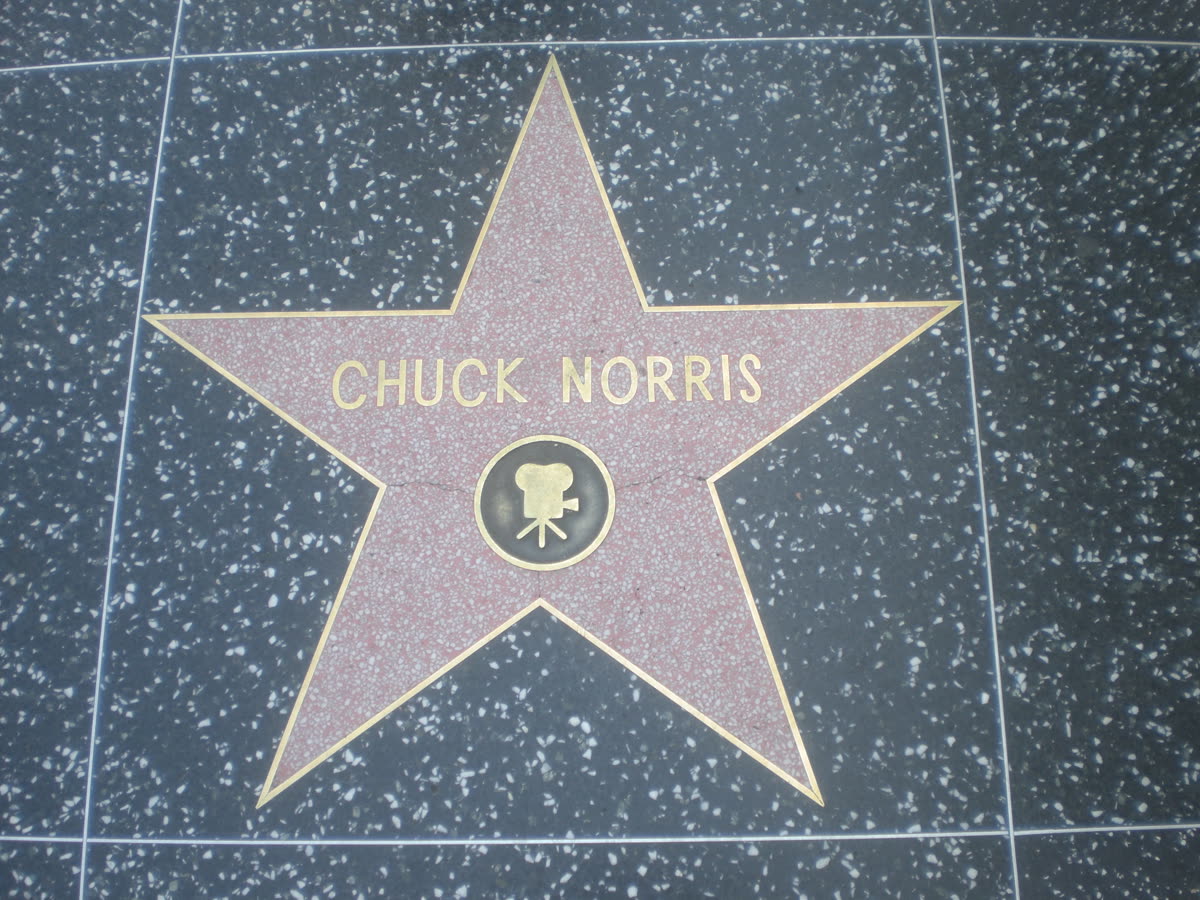
Through the 1970s he built his reputation steadily, in supporting roles and low-budget films. The turning point came in 1983 with Lone Wolf McQuade, where he first played the archetype that would define him: the lone avenger, tough, quiet and lethal. The film was a hit and opened the door to a golden decade.
In the 1980s, Norris became one of Hollywood's most bankable action stars. Missing in Action (1984), Delta Force (1986) and Invasion U.S.A. (1985) cemented his image as a patriotic hero at a time shaped by the Cold War and the rise of American action cinema. He wasn't a method actor and didn't pursue dramatic complexity. He was the on-screen embodiment of a simple but powerful idea: good always wins, and it wins with a spinning kick.
Walker, Texas Ranger: television immortality
When his film career began to slow in the late 1980s, Norris made a move that many actors of his generation didn't manage: he reinvented himself. In 1993, Walker, Texas Ranger premiered on CBS, produced by Al Ruddy, Leslie Greif, Paul Haggis and Christopher Canaan under the Cannon Television label.
The show ran for eight seasons and close to 200 episodes, airing through 2001. Norris played Cordell Walker, a Cherokee-blooded Texas Ranger who solved cases through a combination of street smarts, karate and conservative values. The formula was straightforward and it worked for nearly a decade.
Walker, Texas Ranger wasn't just a ratings success — it was a cultural phenomenon that connected Norris with a new generation of fans worldwide. In Latin America and across much of the Spanish-speaking world, the show aired in prime time for years and left a mark that proved difficult to erase.
The memes, the internet and pop immortality
In the mid-2000s, something unexpected happened: Chuck Norris became a meme. The so-called Chuck Norris Facts — absurdist, hyperbolic one-liners about his supposed omnipotence — spread through forums and email chains around the world. "Chuck Norris doesn't do push-ups. He pushes the Earth down." "Time waits for Chuck Norris." "Chuck Norris doesn't sleep. He waits."
The phenomenon was large enough to reach Norris himself. He responded with humor and humility. In a 2006 blog post, he wrote: "In the history of this planet, there has only ever been one true Superman. It isn't me." That response says a great deal about who he was.
The memes had an unexpected effect: they introduced Chuck Norris to generations who had never seen a single one of his films. For millennials and Gen Z, Norris wasn't just an 80s action star — he was an internet character, a near-mythical figure, a joke everyone was in on.
Chun Kuk Do, the books and the life beyond Hollywood
Beyond the films and the memes, Chuck Norris built a real legacy outside the screen. In 1990 he formally registered Chun Kuk Do, his own combat system, developed from decades of training and the blending of multiple martial arts styles. The system includes a code of honor with personal rules of conduct that reflect his values: discipline, faith, family and commitment.
He was also the author of several books, including The Secret of Inner Strength (1987), The Secret Power Within (1996) and Black Belt Patriotism (2008). He was openly conservative politically, supported Republican candidates and expressed admiration for figures like Ronald Reagan.
In 2015 he moved permanently to Kauai, Hawaii, where he spent his final years alongside his wife Gena O'Kelley, whom he married in 1998. He is survived by his children Mike, Eric, Dina, Danilee and Dakota.
The last video and the farewell
On March 10, 2026, ten days before his death, Chuck Norris posted a video on Instagram training in the Hawaiian sun. In the caption he wrote: "I'm grateful for another year, for good health and for the opportunity to keep doing what I love." There was no sign of what was coming.
On Thursday the 19th, he suffered a medical emergency in Kauai and was transferred to hospital. He did not survive. A close friend had spoken with him by phone the day before and described him as relaxed and in good spirits, joking around as usual.
The world saying goodbye to him today is not just the world of action movie fans. It's the world of multiple generations who, in one way or another, had Chuck Norris as part of their imagination — as a screen hero, as a meme, as a symbol of an era. He lived 86 years as though each one were a test to pass. He passed all of them but the last.




Comments
💬 Log in to comment💬 Join the conversation and log in to comment.