

On March 17, 2026, Argentina's Ministry of Human Capital officially announced the closure of the Volver al Trabajo (VAT) program, with a final payment date of April 9. The measure ends a monthly transfer of 78,000 pesos for close to 900,000 people and replaces it with a vocational training voucher system. In practical terms, it is the last chapter of the Potenciar Trabajo story — the largest and most contested social assistance program in recent Argentine history.
Beneficiaries have already started receiving notifications through the Mi Argentina app and by email, informing them of the program's end date and the option to enroll in the new scheme. Those who take no action before the deadline will lose the benefit permanently, according to official sources.
Where this program came from — and why it's ending now
Potenciar Trabajo was created in 2020 under the Alberto Fernández administration as a consolidation of earlier social plans under the Ministry of Social Development. At its peak it reached more than 1.3 million beneficiaries, with social organizations acting as intermediaries between the state and recipients — a feature that became increasingly controversial.
When Javier Milei took office in December 2023, Sandra Pettovello at the newly created Ministry of Human Capital moved quickly to freeze Potenciar, eliminate the intermediary role of social movements, and redesign the assistance model. The program was split into two groups: roughly 900,000 people under the new Volver al Trabajo scheme — deemed employable and on a path toward labor market insertion — and around 300,000 under the Acompañamiento Social program, designed for those with more structural barriers to employment, such as older adults and mothers with four or more children.
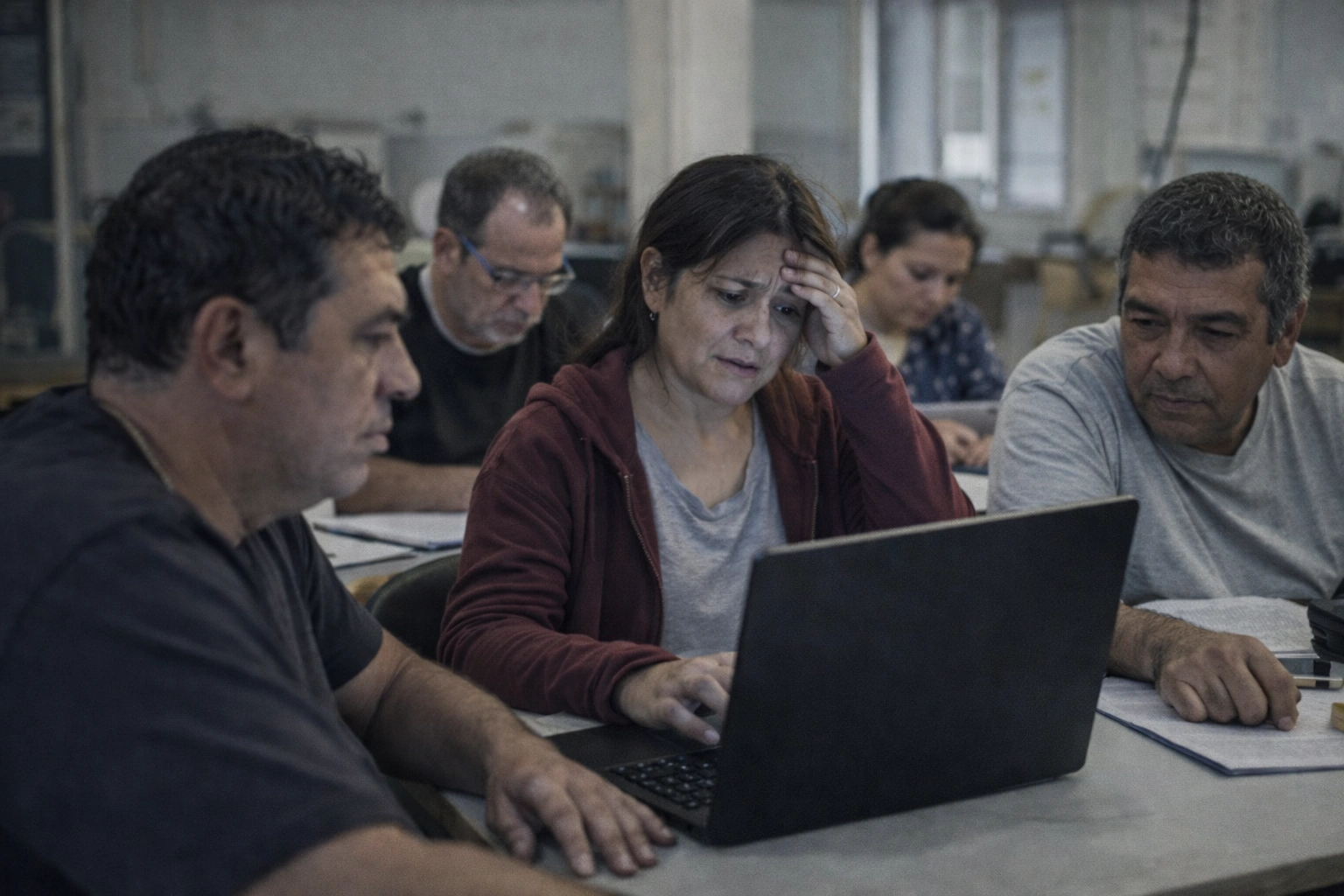
From the start, the government set a 24-month window to maintain the VAT scheme. That window closes in April. The decision not to extend it, according to official sources, was always part of the plan.
Who is affected and who isn't
The closure is not universal. Only the Volver al Trabajo group — the roughly 900,000 people considered capable of entering the labor market — loses the monthly payment. The Acompañamiento Social group of around 300,000 people keeps its assistance unchanged for now.
Within the VAT universe itself, the government acknowledges that not everyone will choose the voucher system. A portion of beneficiaries already work informally, using the plan as an income supplement. Others may simply not participate. The government's position is that in those cases, the monthly transfer of 78,000 pesos serves no real labor insertion function — it's public spending with no verifiable return.
How the voucher system works
The replacement scheme is built on three principles: choice, mandatory attendance and private sector involvement.
Each beneficiary who opts in will receive a voucher to select a course from a federal network of state-accredited training centers. Attendance is compulsory: dropping out means permanent loss of access with no possibility of re-enrollment. Funding goes directly to the beneficiary rather than to the institution, and private companies and training organizations provide the curriculum.
The Ministry is building a federal network of institutions with course offerings tailored to the productive needs of each province. However, the actual scope of that network has not yet been detailed publicly — which is among the most-questioned aspects of the plan. Social policy specialists have raised concerns about whether the system can realistically absorb hundreds of thousands of people at the same time.
The fiscal impact and the deeper debate
The financial effect is straightforward: eliminating close to 900,000 monthly transfers of 78,000 pesos represents a potential saving of around 60 billion pesos per month, though the final figure will depend on how many beneficiaries enroll in the voucher system, which also carries a cost to the state. Part of the savings will be redirected toward financing the training programs and reinforcing education-focused policies, particularly in vulnerable communities.
The deeper debate goes beyond the numbers. The direct transfer model — long criticized for entrenching intermediary structures and failing to generate sustained labor market integration — is being replaced by a conditioned assistance model tied to training. Journalist Cecilia Boufflet described the current scheme as functioning like "a kind of unemployment insurance" for nearly 900,000 people. The government is betting that skills formation, rather than guaranteed income, is the real driver of social mobility. Critics argue that bet only pays off if the training network is ready, reaches people in time and actually leads to real employment.
What beneficiaries need to do now
Those currently enrolled in Volver al Trabajo who want to access some form of continued assistance need to take three steps: check the notification received via Mi Argentina or email, which outlines their individual situation; express interest in enrolling in the training system within the indicated deadline; and select a course from the accredited network and begin mandatory attendance.
Those who take no action before April 9 will lose the benefit without any possibility of re-enrollment. The final payment under the plan is scheduled for that month.



Comments
💬 Log in to comment💬 Join the conversation and log in to comment.