

A global date with more than a century of history
March 8, widely known as International Women's Day, has become one of the most visible global observances related to social rights and equality. What began more than a century ago as a set of labor protests has evolved into an international movement that reaches nearly every country in the world.
Today the day is both symbolic and political. Governments, institutions and civil organizations use the occasion to discuss progress in gender equality and highlight the challenges that remain.
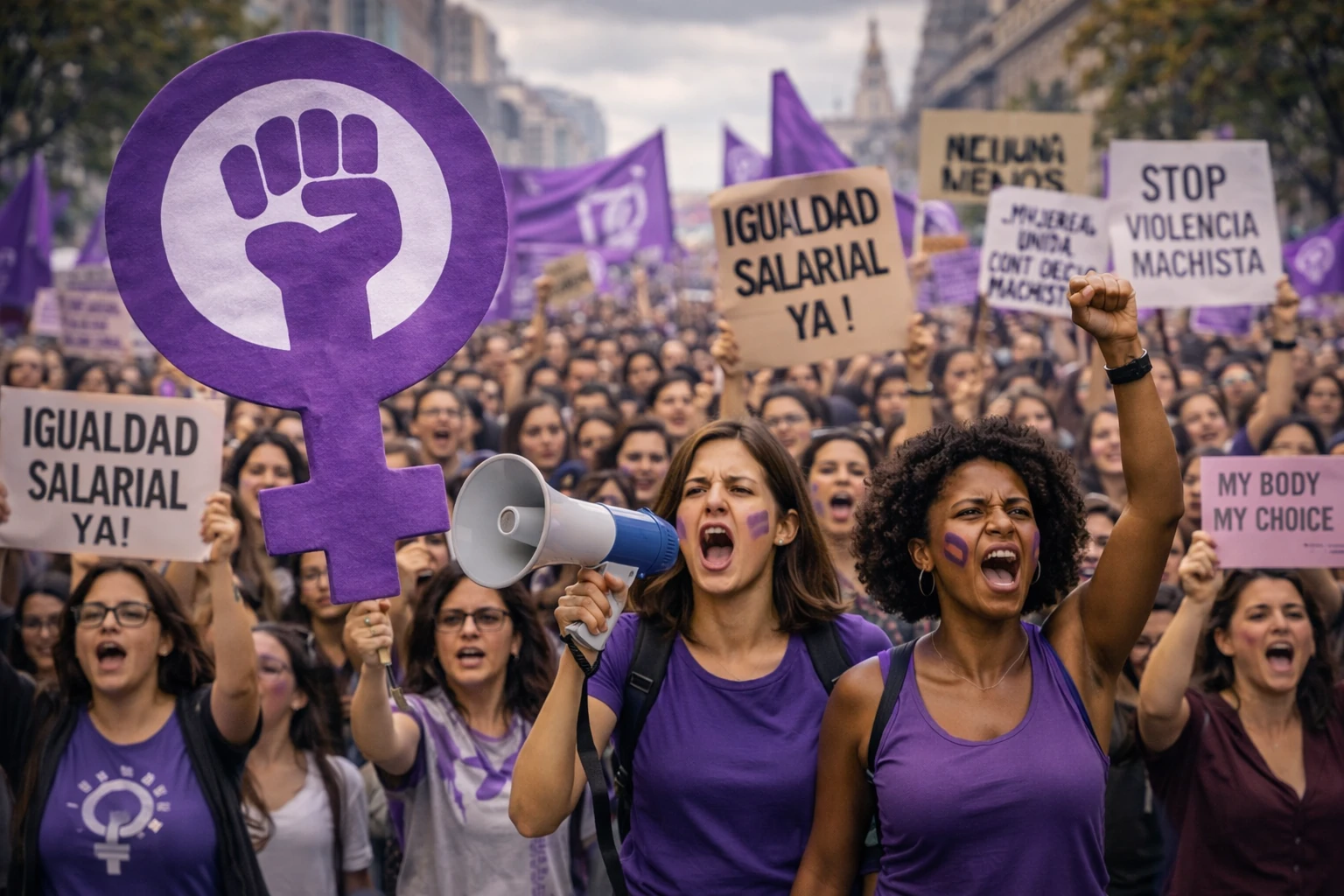
Public demonstrations are common in major cities worldwide. These gatherings often include marches, debates, cultural events and awareness campaigns focused on women's rights and social justice.
In many regions, International Women's Day has become an important annual moment where societies examine how far they have come in terms of equality and what structural barriers still need to be addressed.
Historical roots of the movement
The origins of International Women's Day are closely linked to early twentieth-century labor movements. At the time, women working in factories began organizing protests demanding better working conditions, shorter working hours and fair wages.
Textile workers were among the first groups to mobilize. Their demonstrations highlighted not only economic inequality but also broader social discrimination affecting women in industrial societies.
In 1910, during the International Socialist Women's Conference in Copenhagen, activists proposed establishing a global day dedicated to women's rights. The idea quickly gained support among feminist and labor movements across Europe and North America.
Decades later, in 1977, the United Nations officially recognized March 8 as a global observance dedicated to women's rights and gender equality.
Since then, the date has grown into an international platform for discussion, activism and social awareness.
Different ways countries observe the day
International Women's Day is celebrated in many ways depending on cultural and political contexts.
In Latin America, large public demonstrations have become a defining feature of the day. Cities such as Buenos Aires, Mexico City, Santiago and Bogotá often host massive marches involving students, labor unions and civil organizations.
In Europe, similar demonstrations take place across cities including Madrid, Paris, Rome and Berlin. These events typically combine political activism with cultural activities, public speeches and social campaigns.
In Asia, some countries emphasize educational programs and policy discussions focused on women's participation in economic and public life.
Meanwhile in North America, universities, corporations and advocacy groups organize conferences, awareness campaigns and community events.
Despite these differences, the core message remains the same: promoting gender equality and recognizing the contributions of women in society.
The persistent challenge of the gender pay gap
One of the most frequently discussed topics on March 8 is the gender pay gap, a global issue affecting labor markets across many industries.
Various international studies suggest that women continue to earn less than men for comparable work. Although the exact numbers vary between countries and sectors, the global gap often ranges between 15 percent and 20 percent.
Experts attribute this difference to several factors, including underrepresentation in leadership roles, career interruptions related to caregiving responsibilities and structural inequalities in hiring and promotion processes.
Because of this, many advocacy groups use International Women's Day to push for stronger transparency laws, equal pay policies and greater support for women's economic participation.
Gender-based violence remains a global concern
Another central focus of International Women's Day is the fight against gender-based violence.
Organizations around the world highlight that domestic violence, harassment and femicide remain serious issues affecting millions of women.
International reports estimate that one in three women globally experiences some form of physical or sexual violence during her lifetime.
Governments and international organizations have introduced various programs to address the problem. These include emergency hotlines, legal reforms, support shelters and prevention campaigns.
However, activists argue that stronger institutional responses are still needed to ensure protection and justice for victims.
A new generation shaping the movement
In recent years younger generations have become increasingly influential in shaping the global conversation about gender equality.
Students, young professionals and digital activists are using social media platforms to organize campaigns, share personal stories and amplify discussions about discrimination and rights.
Platforms like TikTok, Instagram and X have allowed grassroots activism to reach wider audiences than ever before.
This digital dimension has significantly expanded the visibility of women's rights issues and helped connect activists across different regions of the world.
Governments and corporations responding to the moment
Alongside grassroots activism, governments and corporations increasingly participate in International Women's Day initiatives.
Companies often announce diversity programs, mentorship initiatives or workplace policy reviews aimed at improving gender equality.
Governments may release reports, announce new legislation or introduce policies designed to promote women's participation in politics, science and business.
These initiatives are welcomed by many observers, though critics sometimes question whether the commitments translate into lasting structural change.
A day that connects past struggles with future goals
International Women's Day serves as both a remembrance of past struggles and a call to action for the future.
The achievements of previous generations — including women's suffrage, access to education and workplace rights — remind societies how social change is achieved through persistence and activism.
At the same time, current movements highlight that equality is still a work in progress.
Economic disparities, safety concerns and representation gaps remain part of ongoing global discussions.
For this reason, March 8 continues to function as a powerful reminder that the pursuit of equality is not confined to a single day but remains a long-term societal effort.
Every year, the observance encourages reflection, debate and collective action aimed at building fairer and more inclusive societies.




Comments
💬 Log in to comment💬 Join the conversation and log in to comment.