
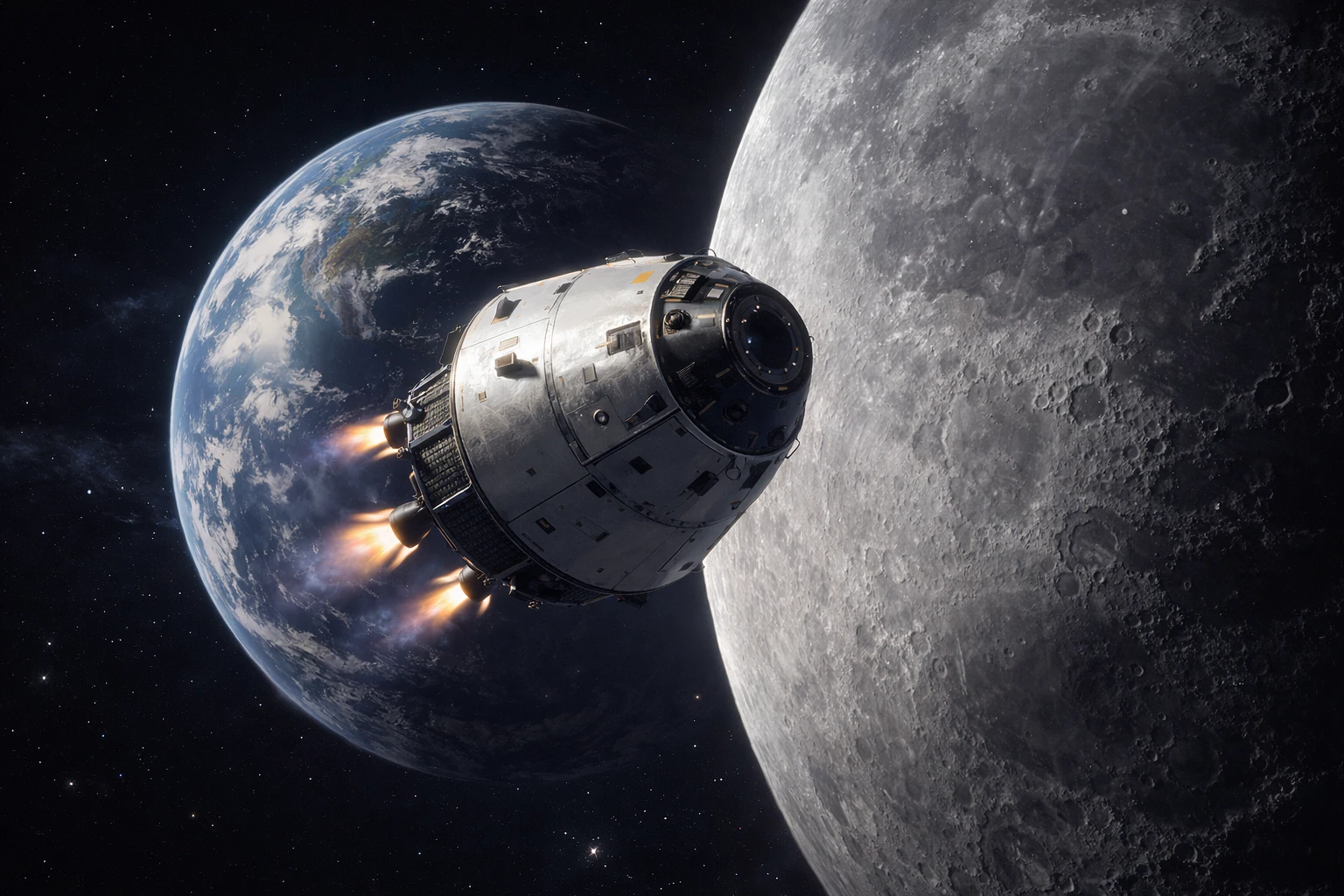
The Artemis II mission is currently in flight with astronauts on board, representing one of the most significant milestones for NASA in modern space exploration. Following launch, the Orion spacecraft entered an orbital phase around Earth, where critical systems are being validated before committing to the lunar trajectory.
Unlike earlier test missions, this flight is a full-scale operational rehearsal. It is designed to verify that every system required for a crewed lunar mission can perform reliably beyond low Earth orbit.
The Artemis II crew
The mission carries four astronauts selected by NASA and its international partners, reflecting the collaborative nature of modern space exploration.
The commander is Reid Wiseman, a former International Space Station crew member with extensive flight experience. The pilot, Victor Glover, previously completed a long-duration mission in orbit and brings operational expertise.
Mission specialists include Christina Koch, known for participating in historic spacewalks, and Jeremy Hansen, representing the Canadian Space Agency in his first spaceflight.
This diverse crew highlights the global scope of the Artemis II program and its long-term vision.
Inside the Orion spacecraft
The Orion spacecraft is a deep-space crew vehicle developed by NASA in partnership with the European Space Agency.
The crew module measures roughly 5 meters in diameter and about 3.3 meters in height. It is designed to support up to four astronauts on missions lasting several weeks beyond Earth’s protective magnetosphere.
Inside, Orion features a fully digital cockpit with multifunction displays, touch interfaces and automated systems that reduce crew workload and increase mission safety.
Life-support systems regulate oxygen levels, cabin pressure, temperature and carbon dioxide removal, ensuring a stable environment throughout the mission.
Heat shield and reentry capability
One of the most critical elements of the Orion spacecraft is its heat shield, the largest ever built for a crewed capsule.
During reentry, Orion can reach speeds above 39,000 km/h, generating temperatures close to 2,700 degrees Celsius.
The heat shield uses ablative materials that gradually erode, dissipating heat and protecting the crew module during its return to Earth.
The European service module
A key component of the Artemis II mission is the European Service Module, developed by ESA.
It provides:
- electrical power through solar arrays
- propulsion for major burns and trajectory adjustments
- thermal control
- storage of water and oxygen
This module allows the Orion spacecraft to operate independently in deep space for extended periods.
Navigation and autonomy
The lunar mission integrates advanced navigation systems that significantly reduce reliance on ground control.
The Orion spacecraft uses star trackers, inertial navigation and Earth-based references to maintain orientation and trajectory.
Redundant systems are built into critical functions, ensuring mission continuity even in the event of partial system failures.
The role of the Atenea satellite
A less visible but technically relevant part of the mission is the inclusion of the Atenea satellite.
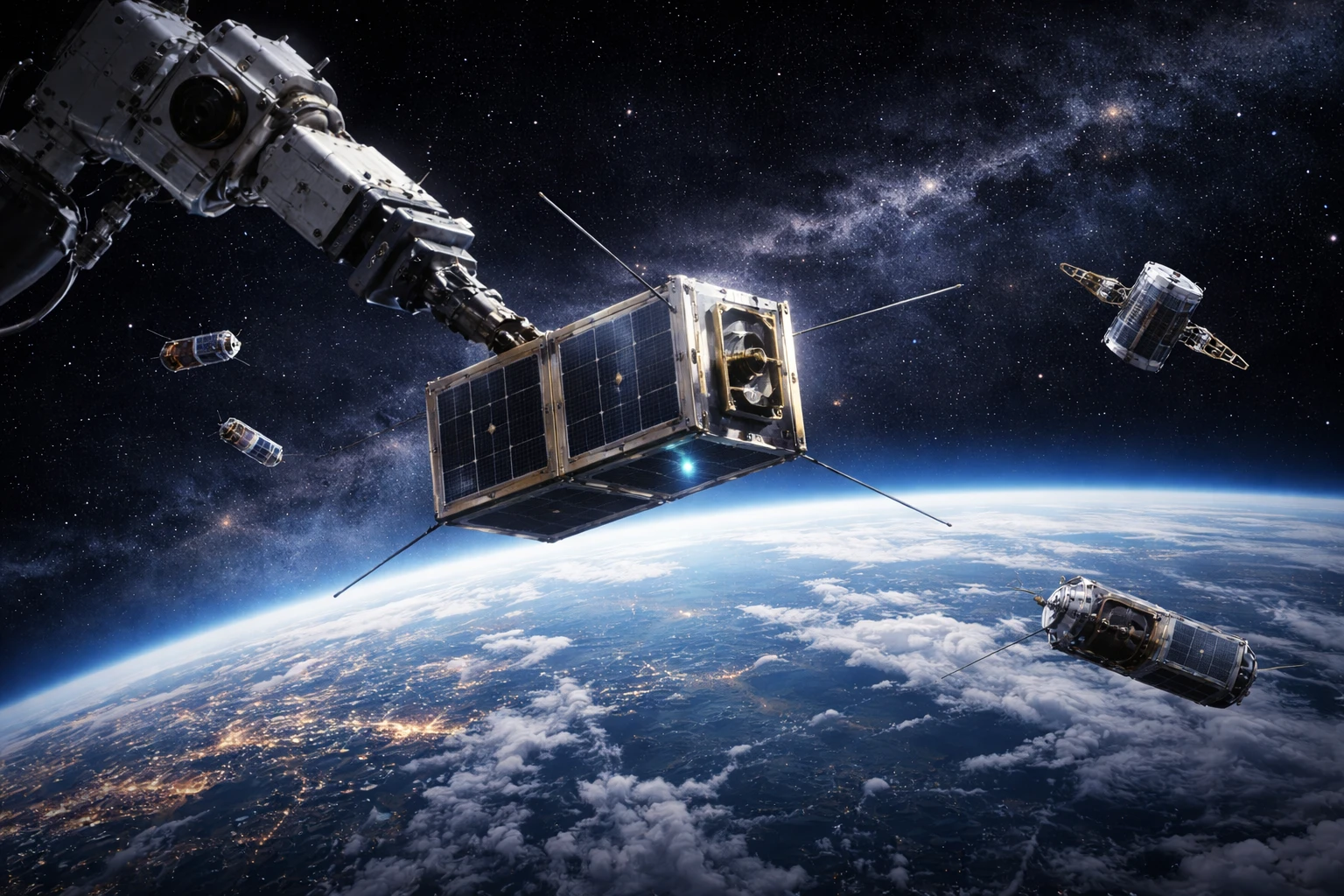
This small satellite, developed with Argentine participation, is part of the secondary payload associated with the Artemis II mission.
It does not play a role in spacecraft operations, but instead travels as an independent technology demonstration platform.
Satellites of this class, often CubeSat-based, are used to test sensors, communications and components under real space conditions.
How this mission differs from Apollo
While comparisons to Apollo are inevitable, the technological gap is substantial.
Modern missions rely on:
- advanced automation
- integrated digital systems
- extended mission duration
- long-term operational strategy
The goal is no longer just reaching the Moon, but enabling sustained presence and future expansion.
Conclusion
The Artemis II mission represents a turning point in human spaceflight. The combination of the Orion spacecraft, an international crew, NASA’s engineering and contributions like the Atenea satellite reflects a new era.
Space exploration is no longer defined by single achievements, but by the ability to operate and expand beyond Earth.





Comments
💬 Log in to comment💬 Join the conversation and log in to comment.