
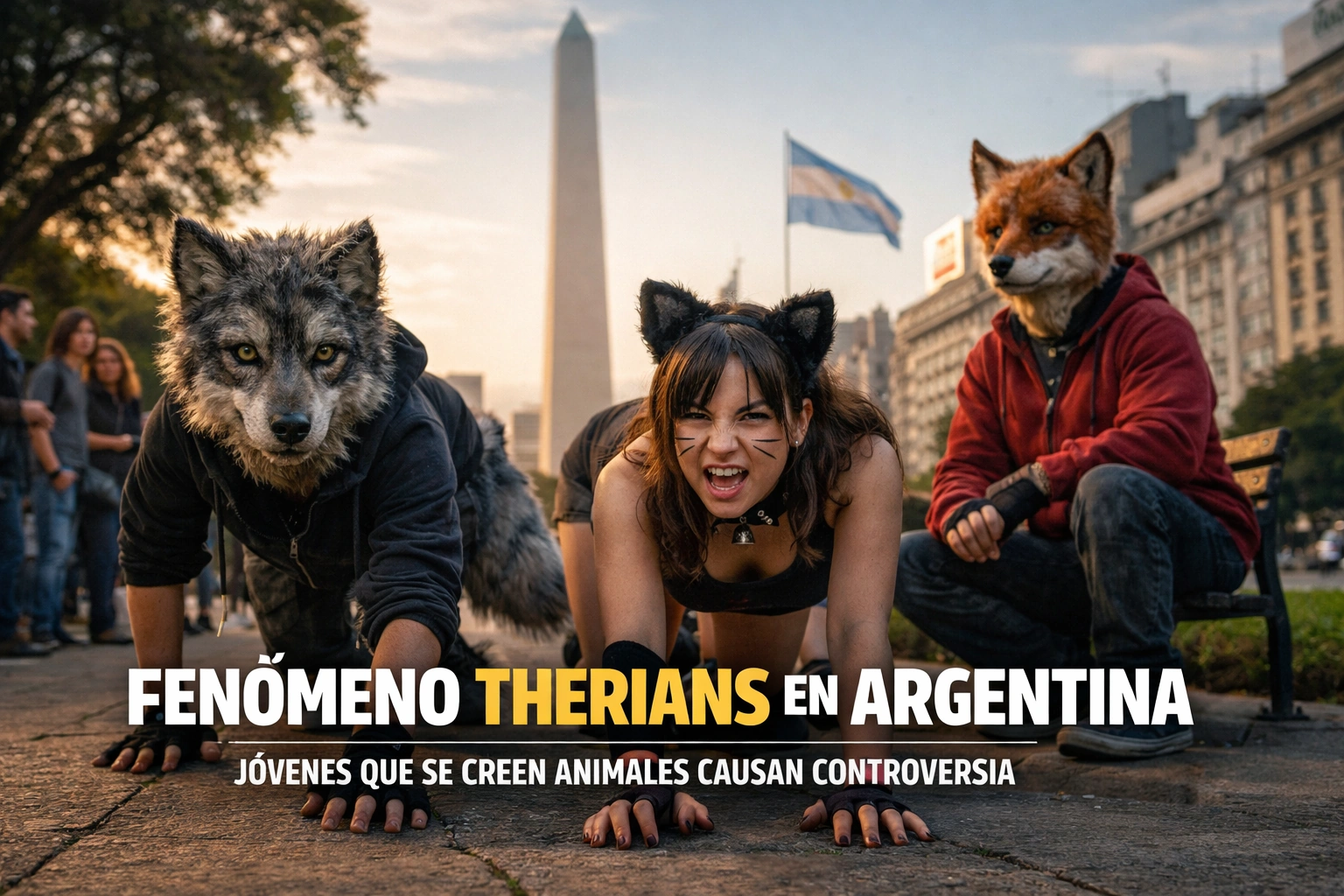
Origins of the therian movement
The term “therian” comes from “therianthropy” and refers to people who feel a deep psychological, spiritual, or emotional connection with an animal identity.
The movement first appeared in online forums during the late 1990s. At that time, it was mostly private, introspective, and limited to small digital communities.
Participants used these spaces to discuss self-discovery, emotional struggles, and identity issues without public exposure.
From online forums to global visibility
During the 2010s, social media transformed the movement. Platforms like YouTube, Instagram, and later TikTok allowed therians to share videos, tutorials, and daily routines.
Content evolved from personal reflection to public performance. Mask making, animal-like movements, and symbolic rituals became common online.
This visibility attracted new members and turned therianism into a recognizable digital subculture in several countries.
Why Argentina became a hotspot
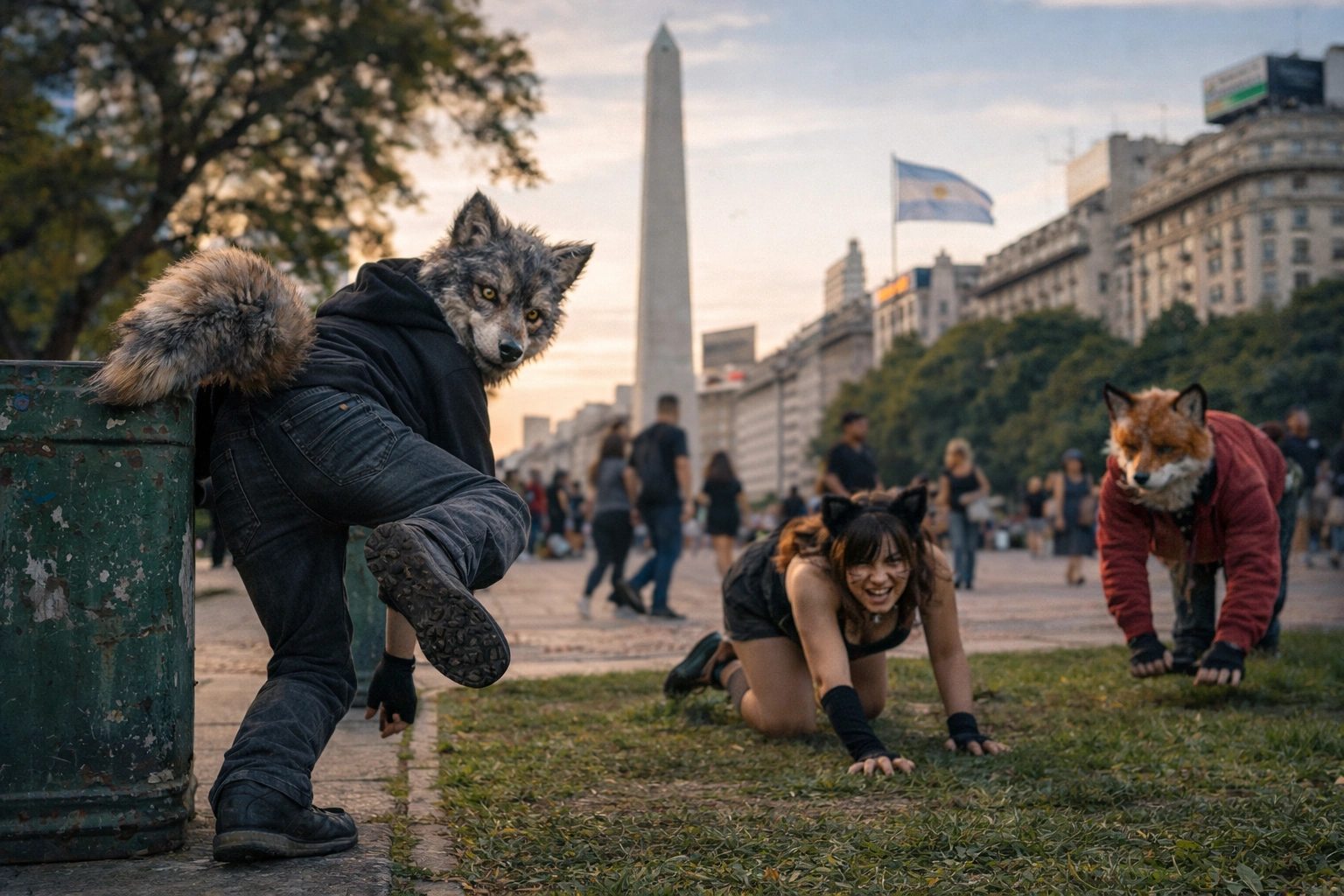
In Argentina, the trend gained momentum between 2024 and 2026. Increased screen time, post-pandemic emotional challenges, and globalized content consumption played a key role.
For many teenagers, therianism became a way to express vulnerability, creativity, and belonging outside traditional social structures.
Videos filmed in parks, schools, and public areas began circulating widely, drawing public attention.
Controversies involving veterinary clinics
One of the most debated issues emerged when some therians visited veterinary clinics seeking treatment as animals.
Veterinarians refused these requests, citing legal and professional boundaries. These incidents went viral, triggering intense online debates.
Some members claimed discrimination, while professionals emphasized ethical responsibility.
Reports of aggressive behavior
Although most participants are peaceful, isolated cases of verbal and physical aggression have been reported.
These incidents usually occur when individuals feel mocked or rejected.
Experts warn that confusion between symbolic identity and real-life behavior may require psychological support.
Not every therian shows extreme behavior, but social media amplifies the most controversial cases.
Psychological and sociological perspectives
Mental health specialists generally agree that therianism is not a disorder by itself.
In many cases, it functions as an emotional coping mechanism or creative outlet.
However, when it disrupts education, relationships, or daily routines, professional guidance is recommended.
Sociologists describe it as a product of digital-era identity construction.
The influence of social platforms
Algorithms promote visually striking content, encouraging imitation and trends.
Many young users adopt the identity after consuming viral videos without fully understanding its background.
This explains the rapid growth cycles of the movement.
Effects on families and schools
Parents and educators express concern about academic performance and social integration.
Several schools in Argentina have already organized meetings to address the issue through dialogue.
The goal is to balance respect with responsibility.
Current state and future outlook
Today, therianism in Argentina exists in multiple forms: private self-identification, online performance, and commercial content.
The social debate continues around identity, boundaries, and mental health.
Specialists emphasize that behind every profile is a real person seeking meaning.
The phenomenon should neither be mocked nor blindly idealized.


Comments
💬 Log in to comment💬 Join the conversation and log in to comment.