

When the FIFA World Cup arrives in the United States, Canada and Mexico, millions of fans will focus on the players, the goals and the battle for the trophy. Behind the scenes, however, another competition will be taking place: the race to modernize football through technology.
For FIFA, World Cup 2026 is not simply a sporting event. It is an opportunity to test, refine and demonstrate technologies that could eventually become standard across professional football. What happens during the tournament may influence how leagues, broadcasters and governing bodies operate long after the final whistle.
A tournament built around data
Modern football generates enormous amounts of information.
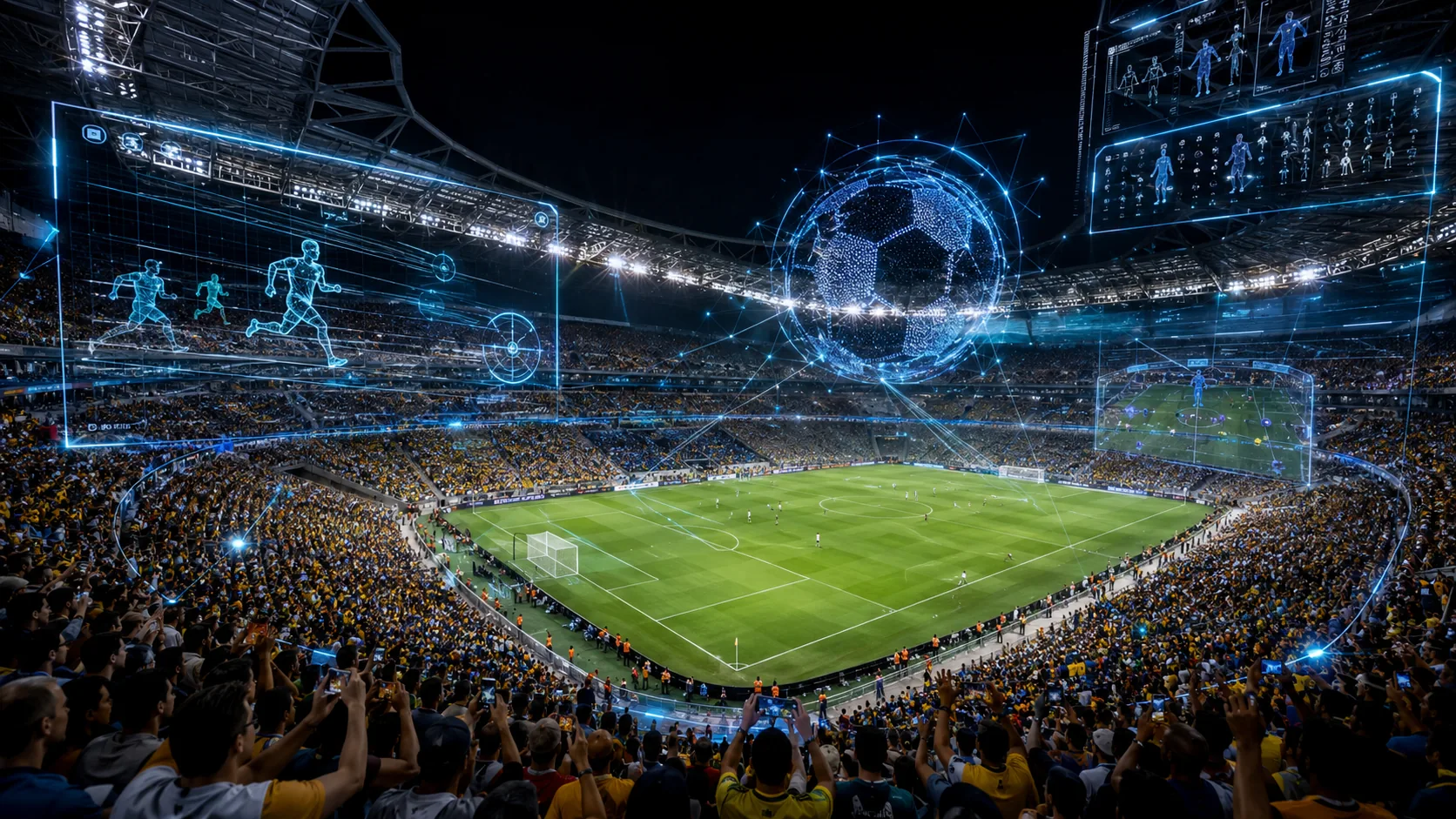
Every sprint, pass, tackle and shot can now be measured, analyzed and visualized in real time. FIFA has spent years expanding its technological capabilities, and World Cup 2026 represents the next step in that process.
The organization is investing heavily in systems capable of collecting, processing and distributing match data faster than ever before. The goal is not only to improve officiating but also to provide teams, broadcasters and supporters with a deeper understanding of what happens on the pitch.
Trionda and the rise of connected footballs
One of the most important innovations is the official match ball, Trionda.
Developed by Adidas, it contains a 500Hz motion sensor that continuously records movement and contact events during play. The system can detect touches with remarkable precision and instantly share information with officiating technologies.
This data helps support decisions involving:
- offsides
- deflections
- handball incidents
- player-ball interactions
Connected-ball technology first gained attention in previous FIFA competitions, but World Cup 2026 pushes the concept further by integrating it more deeply into match operations.
Faster decisions through smarter officiating
Refereeing remains one of the most scrutinized aspects of football.
To reduce delays and improve accuracy, FIFA will use an upgraded version of semi-automated offside technology. High-speed cameras positioned around the stadium continuously track player movement while artificial intelligence analyzes positional data in real time.
The result is a system capable of alerting officials almost instantly when a potential offside situation occurs.
Human referees will still make the final decisions, but the technology significantly reduces the time needed to review complex situations.
Why FIFA is investing in artificial intelligence
Artificial intelligence is becoming one of FIFA's most important tools.
Inside the stadium, AI assists with:
- positional analysis
- player tracking
- offside detection
- event recognition
Outside the stadium, it is being used to help moderate abuse directed at players, coaches and officials on social media platforms.
This broader use of AI reflects a growing reality in modern sports: major tournaments now require both physical and digital protection.
Digital twins and 3D player models
Another project receiving significant attention involves advanced 3D scanning.
FIFA has developed systems capable of creating highly detailed digital representations of players. These models allow officials and analysts to reconstruct incidents with extraordinary accuracy.
Beyond officiating, the technology could transform:
- television broadcasts
- tactical analysis
- coaching tools
- fan experiences
Many experts believe these digital player models could eventually become a common feature across elite football competitions.
The World Cup as a testing ground
Historically, major football innovations often debut on the biggest stage.
Goal-line technology, enhanced VAR systems and advanced performance analytics all gained momentum through international tournaments before spreading to domestic competitions.
World Cup 2026 follows the same pattern.
The technologies introduced here are not designed exclusively for one tournament. FIFA sees them as part of a long-term strategy that could influence football worldwide over the next decade.
A new era for broadcasters
Television coverage is also changing rapidly.
Broadcasters now have access to unprecedented amounts of real-time information, including:
- player speed
- positioning
- distance covered
- tactical movement
- ball-tracking data
As technology improves, viewers can expect richer broadcasts with more context and deeper analysis than ever before.
The challenge is no longer collecting data. It is deciding how best to present it.
What happens after 2026
Perhaps the most important question is what survives beyond the tournament.
If these technologies perform well, many are likely to appear in:
- domestic leagues
- continental competitions
- youth tournaments
- professional club football
The World Cup could become the launchpad for the next generation of football technology.
Conclusion
World Cup 2026 will be remembered for its size, but it may also be remembered as the moment football fully embraced a data-driven future.
With Trionda, advanced VAR, player-tracking systems and expanding use of artificial intelligence, FIFA is using its biggest tournament to test technologies that could shape the sport for years to come.
The matches will decide who becomes world champion. The technology may decide how football evolves next.




Comments
💬 Log in to comment💬 Join the conversation and log in to comment.