
Computex 2026 was the week that defined where the PC hardware industry is heading. NVIDIA dropped the RTX Spark — a Blackwell-powered laptop SoC starting at $1,799. AMD took a different stage entirely.
Instead of chasing the premium segment, AMD's entire Computex 2026 presentation was built around one argument: the people who actually buy the most CPUs aren't the ones spending $1,800 on a chip. They're the ones building or upgrading a gaming PC with $300 to $500 for a processor, who need to know their platform will stay relevant for years without forcing a full rebuild.
That argument has four parts.
Part 1 — Ryzen 7 7700X3D: the $329 entry point into 3D V-Cache on AM5
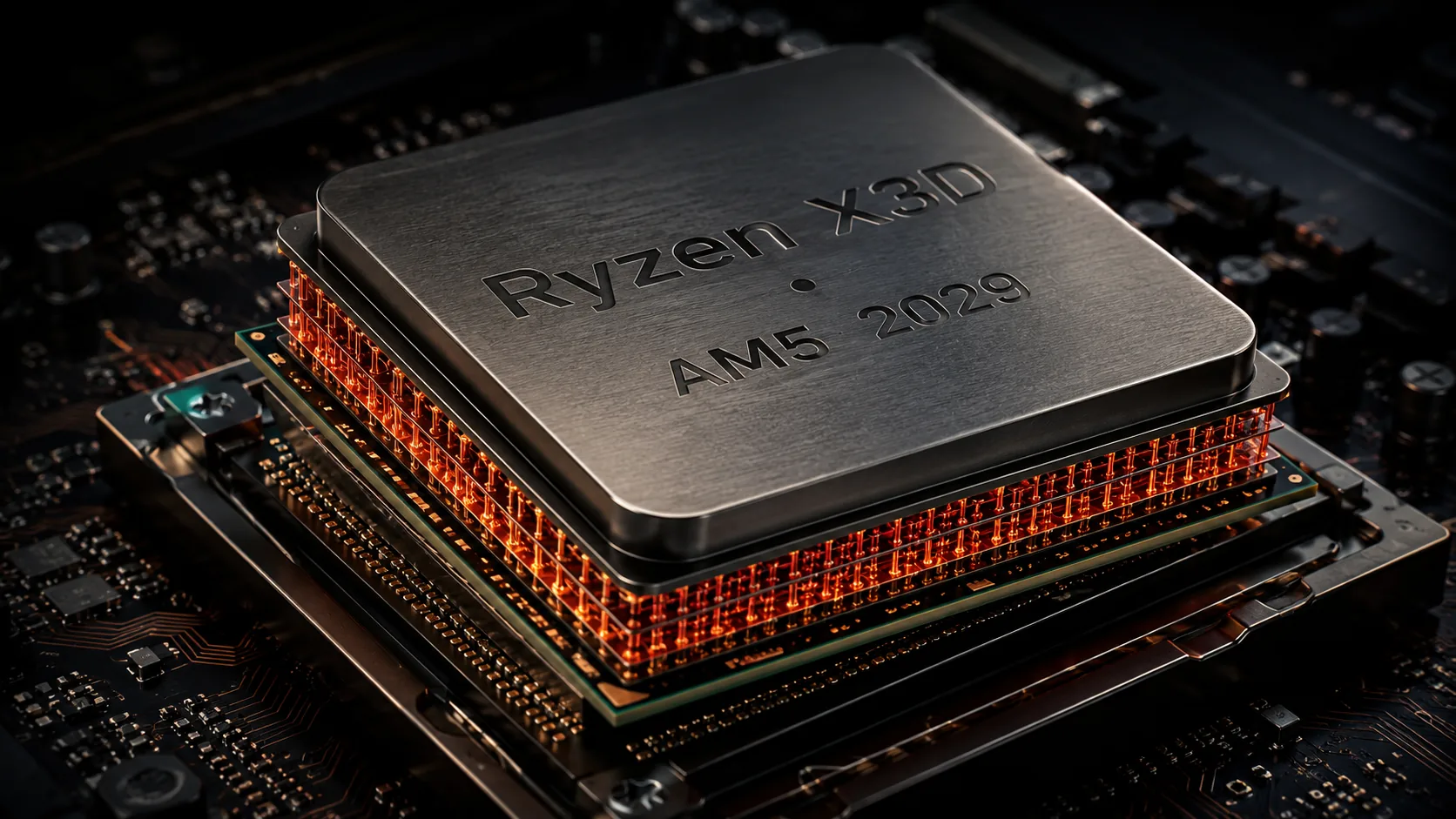
The Ryzen 7 7700X3D is the most important announcement for practical PC builders. It's the first 3D V-Cache processor positioned as an entry point rather than a premium upgrade — and the pricing reflects that.
Built on the Zen 4 architecture with 8 cores, 16 threads and a total of 104MB of cache including the vertically stacked 3D V-Cache layer, the chip boosts to 4.5 GHz from a 4.0 GHz base. That's slower than the Ryzen 7 7800X3D which reaches 5.0 GHz — but in gaming, the clock speed gap matters less than it appears, because 3D V-Cache's advantage comes from keeping game data in cache rather than raw frequency.
At $329 launching July 16, the 7700X3D undercuts the 7800X3D by over $70 in most markets. The performance gap in gaming is considerably smaller than the price gap — which makes the 7700X3D the answer for anyone migrating from AM4 or building their first AM5 system on a real-world budget.
AMD is explicitly positioning this as an on-ramp to the AM5 ecosystem rather than a dead end, backed by the platform longevity announcement covered below.
Part 2 — Ryzen 7 5800X3D 10th Anniversary Edition: AM4's final send-off
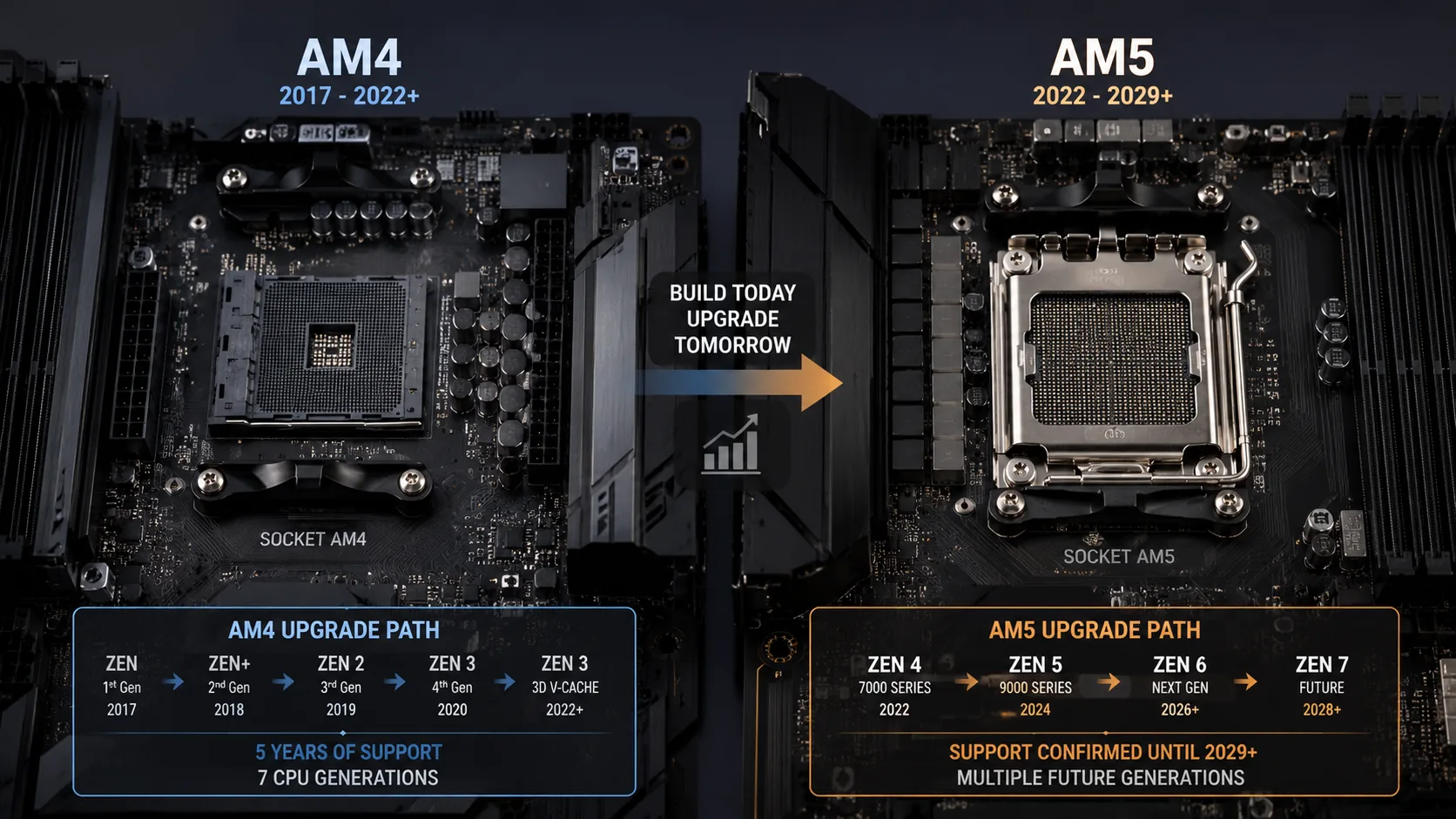
The 5800X3D Anniversary Edition is a nostalgia launch as much as a product launch. AMD's AM4 socket turns 10 in 2026 — first introduced in 2017, it survived seven processor generations before AM5 took over. To mark the milestone, AMD is re-releasing the Ryzen 7 5800X3D, the chip that introduced 3D V-Cache to consumer processors back in 2022.
The silicon is identical to the original: Zen 3 architecture, 8 cores, 16 threads, 100MB total cache including 96MB of 3D V-Cache, 4.5 GHz boost, 105W TDP. This is not a faster chip. It is the same chip, re-released with a meaningful addition: the Carbice Ice Pad thermal interface material.
The Carbice Ice Pad replaces conventional thermal paste with a solid carbon nanotube pad that snaps onto the IHS without application. No paste syringe, no risk of under- or over-applying, no pump-out degradation over time. It performs comparably to liquid metal mods that enthusiasts do manually, now factory-included. For a chip that runs warm, that's a practical improvement even if the core specs are unchanged.
Price: $349, available June 25. There's an acknowledged irony here — the newer, technically superior 7700X3D for AM5 launches at $329, $20 less than this anniversary edition. AMD's rationale: the 5800X3D targets users who want the best DDR4 gaming CPU without changing their motherboard or RAM. For someone with a 400 or 500-series AM4 board, this is the last and best upgrade available before a full platform migration becomes necessary.
Part 3 — AM5 support through 2029: the most consequential announcement
This isn't a new chip. It's a platform commitment — and for long-term planning, it may matter more than either processor.
AMD launched AM5 in 2022 with Ryzen 7000 (Zen 4). The original support window extended to 2027. At Computex 2026, AMD extended that commitment to 2029. That means Zen 5 processors are already AM5-compatible, and whatever AMD ships next — Zen 6, Zen 6+ — will continue to drop into existing AM5 motherboards without requiring a platform change.
Compare that to Intel's track record. Intel has changed sockets repeatedly over the past decade, often requiring buyers to replace not just the CPU but the motherboard and RAM simultaneously. AMD with AM4 ran from 2017 to 2022 with full backward compatibility across generations. AM5 now extends that philosophy at least until 2029.
For anyone buying a motherboard today: a $150-200 AM5 B650 or X670 board purchased now will support processors that haven't been announced yet. That's three years of CPU upgrade headroom without touching the platform. The value of that certainty is real and it doesn't show up in benchmark charts.
Part 4 — Radeon RX 9070 GRE: RDNA 4 goes global
The Radeon RX 9070 GRE was already available in China earlier in 2026 as a region-specific SKU. Computex was the announcement of its global rollout.
Built on RDNA 4 architecture, the RX 9070 GRE targets high-framerate 1440p gaming at a price point below the RX 9070 XT and RX 9080. The key benefits over RDNA 3: improved ray tracing performance, FSR 4 support, better power efficiency and the full RDNA 4 compute stack for AI-assisted upscaling. For 1440p players who don't want to pay flagship GPU prices, this fills the gap between midrange and premium in AMD's current lineup.
Regional pricing and exact availability dates vary by market. AMD confirmed global distribution beginning June 2026.
EXPO Ultra Low Latency: one-click RAM optimization
Alongside the processors, AMD announced expanded support for EXPO Ultra Low Latency memory profiles — a refinement of the existing EXPO standard that already ships on many AM5 platforms.
Certified kits with Ultra Low Latency profiles deliver an average 4% improvement over previous EXPO kits and up to 13% higher FPS compared to standard JEDEC speeds on a Ryzen 7 9700X test system. The implementation requires no manual timing adjustments — a single BIOS toggle activates the optimized profile automatically. Certified modules from G.Skill, Corsair and Kingston began arriving in June 2026.
How AMD's Computex strategy differs from NVIDIA's
Both companies announced hardware at Computex 2026. They spoke to completely different audiences.
NVIDIA's RTX Spark — a laptop SoC starting at $1,799 with analysts warning it could go higher — targets the premium user willing to pay Apple Silicon prices for Windows hardware. It's technically impressive and commercially uncertain.
AMD's Computex lineup targeted the $300-500 CPU buyer, the AM4 owner who has been waiting for a reason to upgrade, the first-time AM5 builder who wants a platform with a clear future, and the 1440p gamer who wants RDNA 4 without the flagship price. None of those are as headline-generating as a $1,799 AI laptop chip. All of them represent a larger total market.
The Ryzen 7 7700X3D ships July 16 at $329. The Ryzen 7 5800X3D Anniversary Edition ships June 25 at $349. The RX 9070 GRE is available globally from June. AM5 has a confirmed roadmap through 2029. That's AMD's answer to Computex 2026.






Comments
💬 Log in to comment💬 Join the conversation and log in to comment.